
Melco Embroidery Machine Cost vs. Happy Japan vs. Brother NQ3550W: A Buyer's Honest Comparison
2026-08-27 · Elise Marceau
What You're Really Comparing
If you've been searching "melco embroidery machine cost," you've probably noticed something confusing: embroidery machine prices range from about $1,500 to over $50,000. That's not a data error. You're looking at two different categories of equipment.
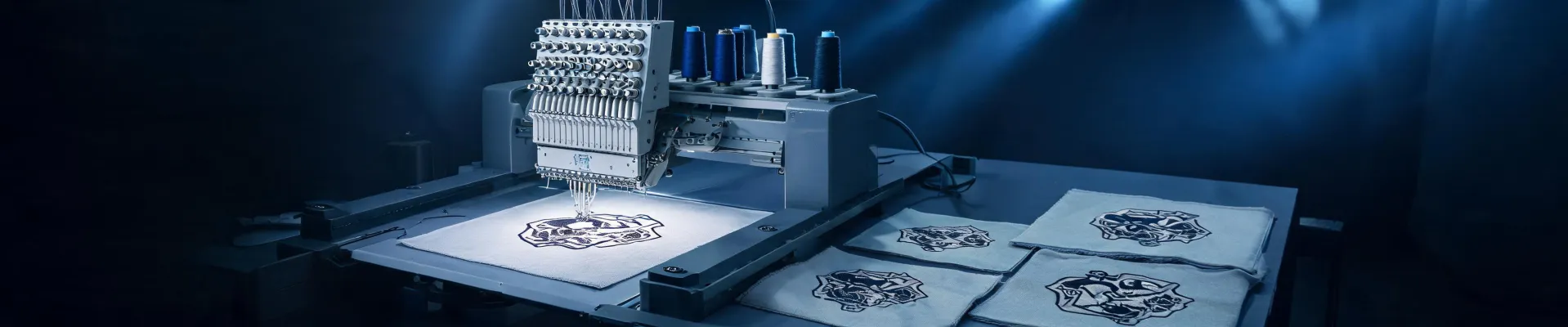
On one side, you have commercial multi-needle machines like the Melco EMT16X and Happy Japan embroidery machine lines—built for production. On the other, you have the Brother NQ3550W sewing and embroidery machine—built for versatility and home use. They both create embroidered designs, but they're as different as a commercial oven and a home toaster.
I've managed equipment purchasing for a custom apparel company since 2020—roughly $200,000 in annual purchasing across eight vendors. I report to both operations and finance, which means I get asked both "will it work?" and "does the math make sense?" So let me share the comparison I wish someone had walked me through before our first capital equipment meeting.
Here's what I'll compare: upfront price, cost per production hour, and the ecosystem surrounding each machine.
Dimension 1: Upfront Price—Accept the Sticker Shock
A new Melco multi-needle machine typically lands between $20,000 and $50,000+ depending on configuration. Happy Japan's commercial models sit in a similar range, generally $15,000–$35,000. The Brother NQ3550W retails around $1,500–$2,000.
That's a 10x to 20x gap. When I first put these quotes side by side in 2021, I questioned why anyone would pay Melco pricing. But the more I learned about what commercial production involves, the more I realized the sticker price is just the entry ticket.
You also need software ($1,000–$3,000), hoops and frames ($500–$2,000), and a starter stabilizer inventory ($300–$800). I missed the stabilizer line item on our first budget. Actually, let me correct that—I didn't miss it. I assumed stabilizers were negligible because our hobbyist machine made one roll last months. A commercial shop burns through cases. That assumption cost us in the first quarter, and it's worth understanding before you buy.
If you're searching "stabilizer embroidery machine" hoping it's a specific type of machine, it isn't. Stabilizer is the backing material that supports fabric during embroidery. But your machine choice absolutely affects your stabilizer workflow—how much you use, how fast you load it, and which types work with your production process.
Dimension 2: Cost Per Production Hour—Where the Math Flips
Here's the thing I only learned by ignoring good advice: in early 2023, we brought a mid-range machine into production work. Our production manager told me to stop. His exact words:
"Buy a truck for truck work. Don't buy a car and ask it to haul freight."
I didn't listen. Seven months and $1,800 in repairs later, I understood.
Let's run the per-hour math that should drive your decision:
- Melco-class machine (~$35,000): 10,000+ production hours over 5–7 years → roughly $3.50–$5.00 per machine hour.
- Happy Japan commercial (~$25,000): similar lifespan → roughly $2.50–$4.00 per machine hour.
- Brother NQ3550W (~$1,700): 500–800 hours of realistic home-duty use → ~$2.10–$3.40 per hour, but it won't sustain commercial workloads.
Why does the Brother number look competitive on paper? Because it assumes you'll use the machine a few hours at a time, with plenty of rest between sessions. That's exactly right for a hobbyist. But if you run it 40 hours a week, the frame, motor, and needle assembly simply aren't built for that duty cycle. I've seen this pattern many times—and when I say "many," I do not mean a few isolated cases. I mean consistently across the production shops I've talked to since 2020.
Honestly, I'm not sure per-hour math captures the full difference. My best guess is the real gap shows up at hour 800 on each machine—in durability, repair frequency, and the cost of downtime. A commercial machine at 1,000+ production hours per year brings the cost per embroidered piece to a fraction of what a hobbyist machine could achieve, because it keeps running.
Dimension 3: The Ecosystem—Software, Hoops, and Hidden Costs
This is the dimension most first-time buyers overlook, and it's where the comparison gets interesting.
Melco's DesignShop software integrates directly with their machines, and the Fast Frame hooping system cuts garment loading time significantly. That sounded like a luxury until I timed our operator: roughly 45 seconds per garment with Fast Frame versus 90 seconds with standard hoops. On a 200-piece order, that's 2.5 hours of labor—over $60 saved at $25/hour. Multiply that across hundreds of orders, and the accessory cost pays for itself.
Happy Japan has a strong ecosystem too, and their build quality is respected across the industry. I'm not going to pretend I have perfect data on every model—configurations differ by dealer. My advice: get itemized quotes from both Melco and Happy Japan dealers and compare software costs separately from machine costs. The difference is in the details, not the brochures.
The Brother NQ3550W offers a thoughtful home ecosystem: a 5x7 hoop, well-designed software, and features that hobbyists genuinely love. It's an excellent sewing and embroidery machine for individual creators. But if you're growing a business, you'll likely outgrow it within the first year. That's not a criticism—it's a design target. It was built for a different job.
Two operating costs nobody warned me about:
Shipping. Once you're producing, you're shipping. USPS pricing effective January 2025 puts a First-Class Mail large envelope at $1.50, and rates have been climbing steadily. On a hundred small orders a month, those pennies become a real line item. Fold shipping into your per-item cost before you commit to a machine tier.
Marketing compliance. If you plan to make environmental claims about your products or packaging—"recyclable," "eco-friendly"—per FTC guidelines (ftc.gov), those claims need substantiation. It sounds bureaucratic, but commercial buyers increasingly ask for proof. Budget for it.
So What Should You Actually Buy?
Here's the practical part. There's no universal winner, but there's a right answer for each scenario.
Scenario A: You're a commercial embroidery shop or adding production capacity. Compare Melco against Happy Japan directly. Both are capable workhorses. Let your decision be driven by three things: which software you and your team prefer, parts and support availability in your region, and the actual itemized quotes you receive. As of Q1 2025, both are solid. Verify current pricing—the market moves.
Scenario B: You're a hobbyist, a maker, or just getting started. The Brother NQ3550W sewing and embroidery machine is a genuinely smart buy. What was best practice in 2020 may not apply in 2025—home embroidery machines have improved dramatically. Just understand the ceiling: it's a home-duty machine, not a production unit.
Scenario C: You're preparing a capital expenditure proposal. Don't present just the machine price. Present the full comparison: equipment cost, amortized per-hour cost, accessories, stabilizer consumption, training, and expected lifespan. My first equipment budget got sent back because I didn't include maintenance projections. Finance people respond to numbers with sources. That advice came from our production manager, and I wish I'd listened sooner.
The Bottom Line
The Melco embroidery machine price is a genuine barrier—I won't dismiss it as irrelevant. But the question behind "how much does a Melco cost?" is usually "does production equipment justify itself for what I'm building?"
If you're producing commercially, yes—and Melco deserves a serious place in your evaluation alongside Happy Japan. If you're creating at home, the Brother NQ3550W is more than capable, and I'd recommend it without hesitation.
The fundamentals haven't changed: match the equipment to the workload. But the execution has transformed since 2020—software integration, hooping systems, and machine durability are all better than they were five years ago.
That's my take after five years of buying this equipment. I expect some shop owners will disagree with my cost-per-hour estimates, and I'd welcome the correction—the best purchasing decisions I've made came from other buyers catching my blind spots. Do your own math, verify current pricing, and compare the dimensions that actually matter for your workload.

Elise Marceau
Elise Marceau is an LED display and digital-signage systems analyst covering LED video walls, modular screens, transparent LED, control processors, and indoor or outdoor signage. She applies IEC 62368-1 safety principles while comparing pixel pitch, luminance, contrast, refresh rate, colour uniformity, viewing angle, ingress protection, power density, module serviceability, and signal redundancy. Her specification guides help integrators, venue operators, retailers, and procurement teams align viewing distance, ambient light, content format, installation access, electrical load, and lifecycle support.
Leave a Reply
Recent Posts
What an Undercover Compliance Check Taught Me About Age-Verification Vending Machines
I wasted $12,400 on vending equipment before I understood why ID verification is the only spec that actually matters. Here's the mistake, the fine, and the checklist that replaced it.
Melco Embroidery Machine Reviews Won't Tell You This—But Your Hooping Will
After three commercial embroidery machine purchases in five years, I've learned that reviews and price sheets only cover half the story. Here's what actually determines ROI in a real shop.
Choosing the Right Commercial Embroidery Setup: Three Scenarios (and the Mistakes I Made in Each)
A decision-framework guide for commercial embroidery equipment buyers, organized by three shop scenarios — with real cost mistakes, equipment comparisons, and a self-assessment checklist. Covers Melco EMT16X pricing, hoops, entry-level options, and more.
Melco vs HappyJapan: What I Check Before Buying a Commercial Embroidery Machine
A quality compliance manager compares Melco and HappyJapan commercial embroidery machines on price, software, hoops, mini options, and denim jacket workflows. Includes TCO red flags and scenario-based advice.
Sourcing a Melco Embroidery Machine for Sale Under Deadline Pressure: 9 Steps I Run
A rush-sourcing checklist for commercial multi-needle embroidery machines — from converting your deadline into hours to testing with your own file before you pay.
How Much Does a Melco Embroidery Machine Cost? A $12,000 Mistake I Made So You Don't Have To
A small embroidery shop owner shares how a Melco purchase quote turned into a $12,000 lesson about total cost, sewing machine output, small orders, and the questions to ask before buying.
Why Cheap Thread and Worn Hoops Cost More Than a Used Melco Embroidery Machine
A procurement manager's argument for why rework, client perception, and TCO make cheap embroidery inputs and undocumented used machines the most expensive choices in a commercial shop.
Commercial Embroidery Machine Checklist: Melco, Hoops, Software, and When a PE570 or Singer HD500 Makes More Sense
A quality manager's 7-step checklist for specifying a commercial embroidery sew machine, from hoops for Melco embroidery machine to Melco EMT16X price checks and honest limitations.
Your Melco Emergency Is Probably an Inspection Problem
Most rush embroidery failures start before the machine runs. A commercial embroidery specialist explains why prevention beats cure for Melco shops, Bravo owners, and London deadlines.
Why I Won't Buy a Home Embroidery Machine for Commercial Production (And When You Should)
A procurement manager's take on Melco Bravo, Melco embroidery software, and why hobby machines like SE2000 or Usha Janome Memory Craft 550E rarely belong in a commercial shop.