File intent
Artwork is reviewed for stitch density, trims, thread order, backing, and the article surface before production time is booked.

Innovation on this page means clearer digital handoffs, better production memory, and machine decisions that help operators handle custom work without losing control of quality. The focus is stitched output, not abstract promises.
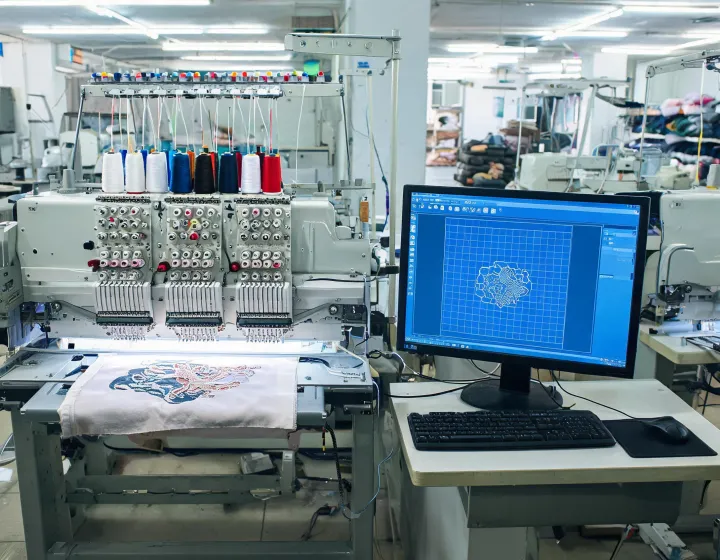
This is the story of embroidery technology progress: file preparation, setup intelligence, production documentation, and buying support that helps a shop scale with evidence from real jobs.
Artwork is reviewed for stitch density, trims, thread order, backing, and the article surface before production time is booked.
Hoop choice, needle notes, backing combinations, and sampling decisions become references for future repeat orders.
The machine conversation includes how staff will load, monitor, pause, trim, and inspect work across mixed article types.
Finished samples are evaluated with practical notes so the next batch starts from known conditions rather than memory.
Color sequencing and thread availability can be discussed before operators start a run.
Digitizing decisions stay connected to the article, backing, hoop, and approval sample.
Flat goods, caps, bags, and specialty pieces each receive different access planning.
Fast sample feedback helps a shop decide whether the file, material, or setup needs adjustment.
A connected embroidery workflow is only useful if sales, art, production, and inspection teams can understand it. The same machine can feel different depending on whether the shop sells one-off personalization, contract decoration, uniforms, or retail merchandise.
Quote with awareness of stitch complexity, article difficulty, and turnaround risk.
Prepare files with fabric behavior, density, and trim decisions visible to production.
Load, monitor, and correct jobs with clearer notes from the approved setup.
Compare machine capacity against labor, space, training, and repeat-order potential.
workflow checkpoints
application categories
sample review layers
repeatable job record
Describe your artwork process, operators, article types, and current bottlenecks. The response can focus on production clarity rather than a generic equipment pitch.